Historic Homes in Westfield NJ and the Rules for Owners
Historic homes in Westfield run from Queen Anne houses built during the town's growth as a railroad suburb to the early Colonial Revival houses of Stoneleigh Park, and the main rule for owners is that covered exterior work on a designated property needs a Certificate of Appropriateness before a permit can be issued. Once an application is complete and notice requirements are met, the Historic Preservation Commission has 45 days to decide unless the deadline is extended by agreement.
Quick Facts
- Westfield's 2002 Historic Preservation Plan map identifies ten historic districts and numerous historic sites.
- Stoneleigh Park, bounded by Dorian Road, Rahway Avenue, Westfield Avenue, and Shackamaxon Drive, was listed on the New Jersey and National Registers of Historic Places in 1988.
- In Westfield, a Certificate of Appropriateness must be in hand before covered work gets zoning approval or a construction permit, and it stays valid for two years from the date of issue.
- Owner-occupied homes don't qualify for the federal rehabilitation tax credit.
Which historic homes in Westfield fall under the town's review?
Review applies to properties Westfield has designated under its historic preservation ordinance. The town's historic preservation map separates those from properties that are only identified in the Historic Preservation Element of the Master Plan. Check it early whenever an older Westfield NJ house for sale catches your interest.
Inside a locally designated district, a building doesn't have to be historic on its own to need exterior-work review. Listing on the State or National Register works differently: it doesn't by itself restrict a private owner, because the local ordinance is a separate layer of protection. The town also says designated sites and districts make up only a small portion of its historic buildings, and it encourages owners of other historic properties to use its design guidelines.
Where Westfield's historic districts are
Westfield is a Union County town, and the districts described in its 2002 preservation plan include Boulevard, Stoneleigh Park, Downtown, Westfield Gardens, Tremont Avenue, and a combined Dudley Park and Kimball Avenue district. Each has its own character.
Stoneleigh Park
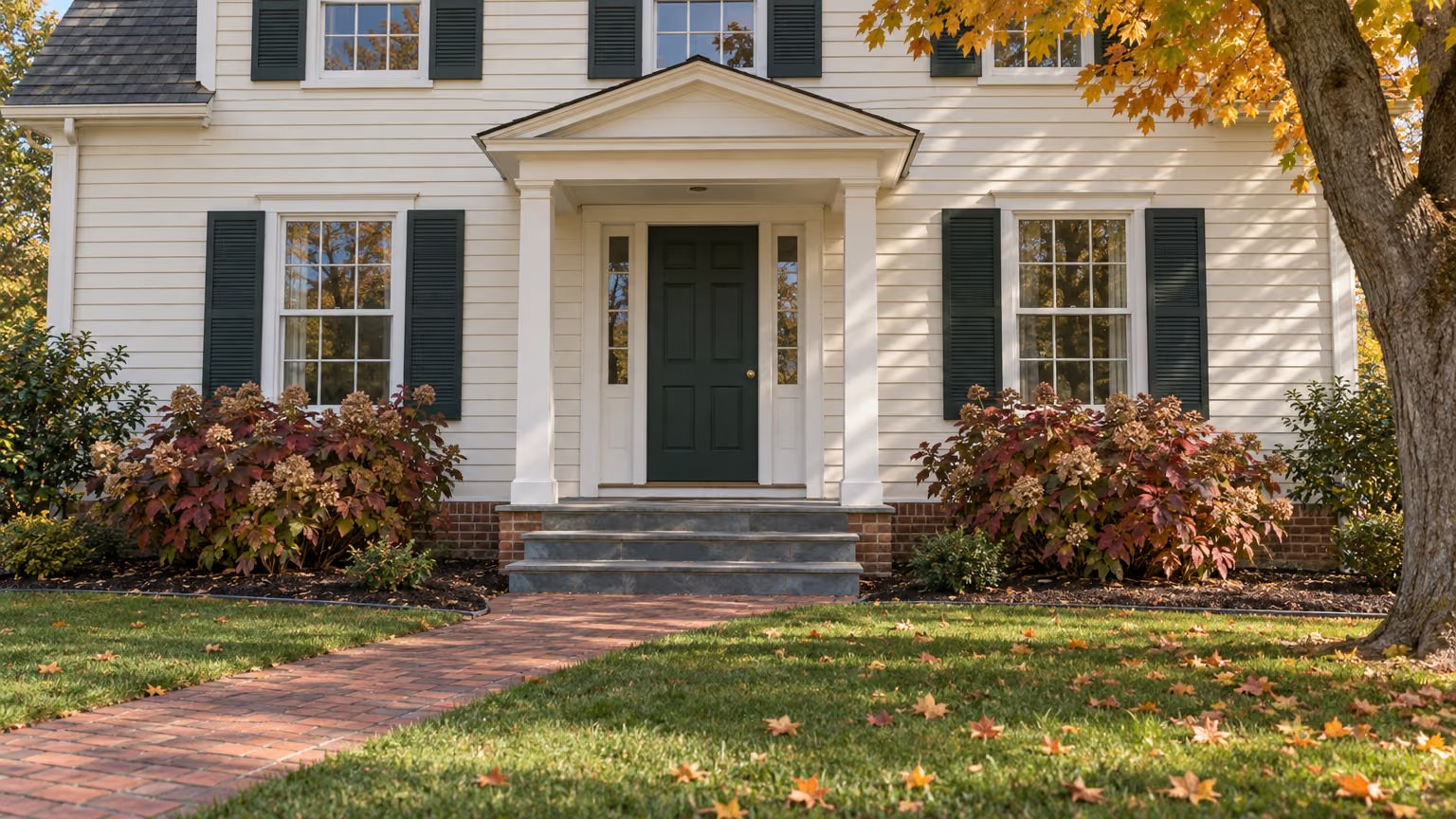
Stoneleigh Park is a planned development bounded by Dorian Road, Rahway Avenue, Westfield Avenue, and Shackamaxon Drive. Of the districts on the 2002 map, it's the only one the state and federal registers recognize. The Jed Smith Foster House, built around 1905, is an example of the development's first period of Colonial Revival construction.
Kimball Avenue and Dudley Park
The Kimball Avenue Historic District runs along both sides of Kimball Avenue between Elm Street and Lawrence Avenue, and the ordinance lists 15 single-family properties in it, two of them on Lawrence Avenue. The 2002 plan places it within the larger Dudley Park district, a fine collection of late nineteenth and early twentieth century homes in the popular styles of the turn of the century.
Boulevard
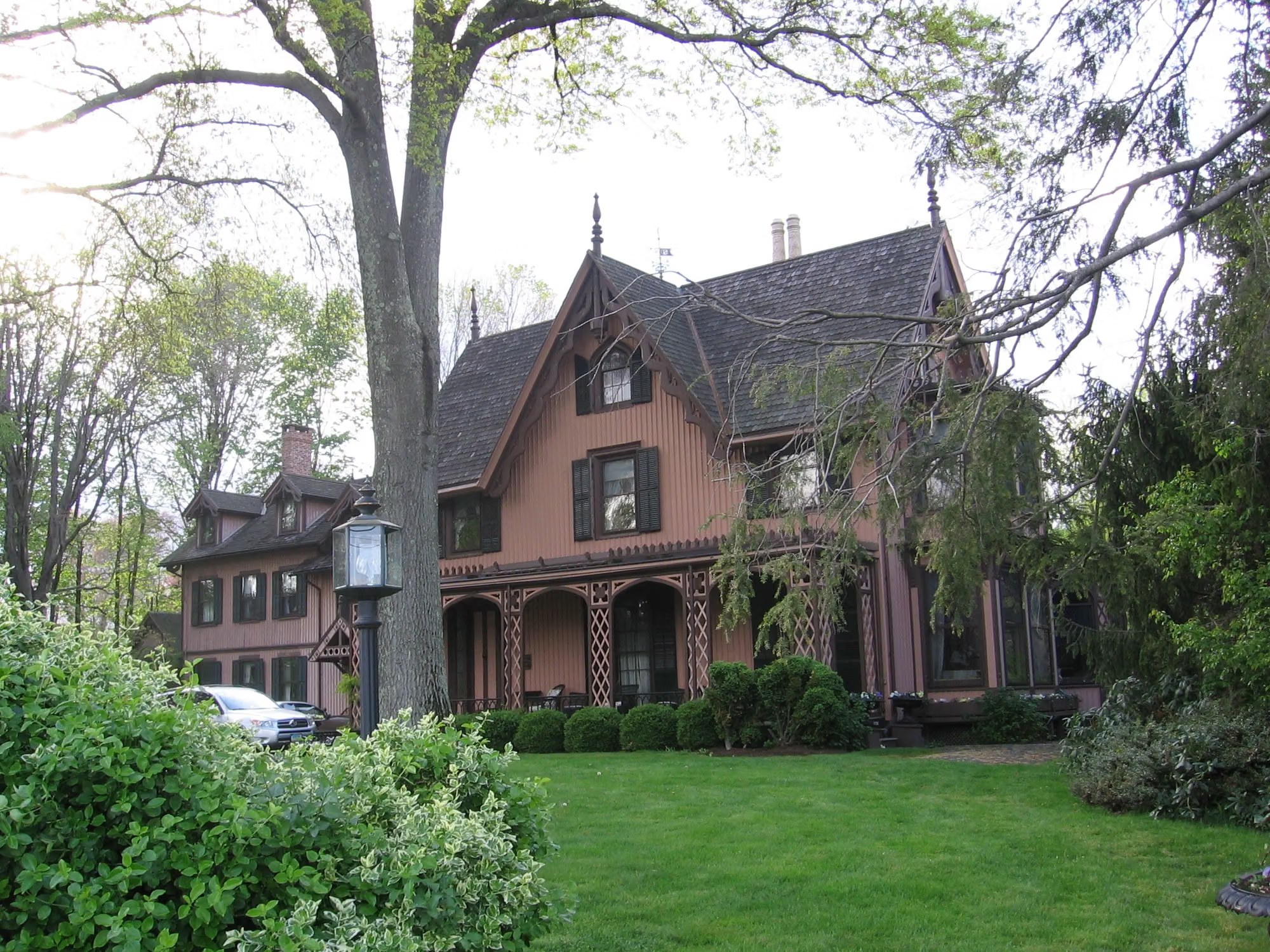
Boulevard has been proposed as a historic district. Its 500 block is largely spacious Queen Anne houses, and commission minutes from 2024 counted a circa 1890 Queen Anne Vernacular house on Boulevard as a contributing resource to the proposed district.
Colonial Revival blocks, earlier houses, and current prices
Colonial Revival houses are especially prominent in Terrace Park and Westfield Gardens. The 2002 plan credits developer E.S.F. Randolph's Terrace Park with shaping Westfield's character as a Colonial Revival residential town.
Older houses are mixed in too. Most houses in the Prospect Street historic area went up between 1865 and 1910, and the Mills-Ferris-Pearsall House on Ferris Place is an antebellum vernacular house with Gothic Revival detailing and a rough ashlar coursed stone foundation under its eastern wing.
Age is typical here, not unusual. Union County's Westfield profile reports that 68.9% of housing was built before 1960 and over 78.4% is single-unit detached, and the Westfield neighborhood guide covers the town beyond its historic streets. Redfin reports a $1,491,905 median sale price for Westfield single-family homes sold July to September 2026. Zillow's September 2026 estimate for a typical single-family home in town is $1,329,452; Redfin's number comes from homes that closed, while Zillow estimates the value of all homes, sold or not.
What exterior work needs a Certificate of Appropriateness in Westfield?
Covered exterior work on a designated Westfield property needs a Certificate of Appropriateness from the Historic Preservation Commission, in place since 1984, before the Zoning Officer can give zoning approval or the Construction Official can issue a permit. Paint is the easy part: color changes are exempt, and the 2020 ordinance revision dropped both the color submission and the application fees. Painting an exterior surface that was never painted does need a certificate.
The commission's guidelines favor repairing historic features over replacing them. In weighing a change, it looks at the effect on historic and architectural character and asks whether the original textures and materials could be reproduced only with great difficulty.
Minor work and the short form
Minor work with a negligible effect on historic character qualifies for an expedited short-form review. Replacing an exterior element with a different material that looks similar is one example that may qualify, and on a designated landmark building, work involving 10% or less of the façade surface area is among the cases the ordinance treats as minor. After staff determines a complete minor-work application doesn't need the full commission, the chairperson or a designee can approve it. In September 2023, a request to replace a slate roof with shingles on a Stoneleigh Park house was classified as minor work, and the certificate was issued.
Major work and the long form
Any application that isn't minor is major. The long-form application is the default for major work and for projects whose classification is uncertain, and it requires scaled drawings prepared by a licensed professional unless a submission waiver is granted. Projects that also go before the Planning Board or the Zoning Board of Adjustment are referred to the commission whenever they involve a historic district or landmark.
How long review takes
The commission has 45 days to decide after an application is complete and notice requirements are satisfied, unless that's extended by agreement. Regular meetings fall on the fourth Monday of each month at 7:30 pm, which helps when you're scheduling a contractor. A certificate is valid for two years from issue, and the commission can approve reasonable extensions. Filing costs nothing, but plan a budget for the licensed professional's drawings on major work.
Are there tax credits for restoring a historic Westfield home?
Incentives for a historic house you live in are limited. Owner-occupied homes don't qualify for the federal rehabilitation tax credit, and Preservation New Jersey states that the state has no programs providing direct funding specifically for preservation work on private residences.
New Jersey's Historic Property Reinvestment Program is built for larger projects. Its residential projects must serve a residential rental purpose and contain at least four dwelling units, and construction generally can't start before the application or agreement is executed, with specified exceptions.
A bill called the Homeowners' Historic Property Reinvestment Act would create a homeowner credit, but it's proposed legislation, not an enacted program. As written, it would allow a refundable gross income tax credit of 25 percent of the rehabilitation outlay, capped at $25,000 per property over ten years, with no more than 60 percent of the cost going to interior work. The owner would also have to occupy the home as a principal residence for twelve consecutive months after completion.
Inspecting an older Westfield house
A New Jersey home inspection is a visual, functional, non-invasive examination of the readily accessible parts of a house, so an older home often calls for specialists as well. The state's scope covers structure, exterior, roofing, plumbing, electrical, heating, cooling, interior, insulation, ventilation, fireplaces, and solid-fuel appliances.
Allison Ziefert, who co-leads Allison Ziefert Real Estate Group, worked in construction project management, downtown development, and local government before real estate, and holds degrees from Barnard College and Columbia University in art history, urban planning, and historic preservation. That background is useful when reading an inspection report against a renovation plan: how the house was built, how it can be improved, and what may affect its value.
Foundations and drainage
Drainage deserves attention in any older house, and NAR lists improper drainage that could damage a building over time among the conditions inspectors should examine. For an older building with severe settlement, HUD recommends advice from a structural or soils engineer.
Wiring and plumbing
Knob-and-tube wiring was in common use in North America from about 1880 to the 1940s. It has no ground wire, and its hazards come from age, improper modifications, and building insulation surrounding the wires; HUD flags brittle or failed wire insulation as a major concern. InterNACHI notes that no code requires removing all of it and suggests getting a replacement estimate to use in price negotiation. HUD also recommends having a qualified residential electrician assess the system's condition and capacity before deciding how much to reuse. For plumbing, rust-colored water and restricted flow are potential warning signs of deteriorated galvanized steel pipes, according to HUD.
Heating oil tanks
Ask whether the house has or once had a heating oil tank. NJDEP warns that older tanks, whether underground, above ground, or in a basement, can corrode and contaminate soil or groundwater.
Lead paint and asbestos
Federal law requires sellers and agents of most pre-1978 housing to disclose known lead-based paint information, provide available records and the Protect Your Family From Lead in Your Home pamphlet, and include a Lead Warning Statement in the contract. Buyers get a 10-day period for a lead paint inspection or risk assessment, which the parties can lengthen, shorten, or waive in writing. The EPA recommends a certified lead-based paint inspector or risk assessor to determine whether and where a home has lead-based paint, and, for renovations in pre-1978 homes, a contractor certified and trained in lead work practices. With asbestos, the EPA advises leaving material in good condition alone when it won't be disturbed, and considering an accredited inspection when remodeling could disturb suspect materials.
Frequently Asked Questions
Does National Register listing limit changes to a Stoneleigh Park home?
Listing on the New Jersey or National Register doesn't by itself restrict what a private owner can do with a Stoneleigh Park home. Westfield's local preservation ordinance is a separate layer, and the town has reviewed exterior work there, including a 2023 roof replacement. Check the town's preservation map to see whether a particular house is designated.
Can you repaint a historic Westfield house a new color without approval?
Yes, paint-color changes are exempt from Westfield's historic certification. The 2020 ordinance revision removed the requirement to submit colors to the Historic Preservation Commission. Painting a previously unpainted exterior surface is different and requires a Certificate of Appropriateness.
Does Westfield review demolition of an older house that isn't designated?
It can, because Westfield's special demolition review covers buildings identified in the Historic Preservation Element of the Master Plan and buildings originally constructed before 1930. A house may fall under it without being a designated landmark. That matters most to anyone weighing a teardown rather than a renovation.
Could a Westfield house end up in a new historic district?
Yes, new districts can be proposed, and a Boulevard Historic District has been. Residents there formed a Historic Association to promote its preservation, according to the commission's August 2024 minutes. Minutes from February 2024 note that a district takes in 100% of the buildings in the designated area and that designation requires a 75% majority.
Does an old underground oil tank have to be removed?
No, NJDEP doesn't require removing a residential underground heating oil tank solely because it exists when there's no indication of a discharge. Contamination found during a removal must be remediated. Work on these tanks has to be done by NJDEP-certified individuals or firms.
Historic review in Westfield is manageable once you know a house's status, which form its project needs, and what the inspection found. Tremont Avenue between Euclid Avenue and South Chestnut Street, which the 2002 plan counts among the purest and best-preserved early Colonial Revival streetscapes in Westfield, is a good street to see early in a search. Allison Ziefert Real Estate Group, in business since 2010, can check the houses on your list against the town's preservation map and help you weigh what each one would need.